
How Galveston Resident Searches Begin
Galveston resident searches work best when the starting fact controls the route. An address belongs first with the Galveston Central Appraisal District, also called GCAD. A recorded purchase, lien, plat, or correction instrument belongs with the Galveston County Clerk. A date in the past belongs with the Rosenberg Library's Galveston & Texas History Center, or GTHC. A court matter belongs with the clerk and the court portal, while a current registration question has a narrow Texas voter route. Each source answers a smaller question well. None is a complete list of people in the city.
Keep the exact spelling, date, source URL, and result type for each useful hit. A parcel owner is not automatically an occupant. A directory entry is a dated statement by its compiler. A court result identifies a case role, not every fact about a person. Galveston's records are most reliable when two independent sources agree on the same name, place, and period.
- For a current parcel clue, search GCAD by address or owner and save the situs address, mailing address, property ID, geographic ID, and legal description separately.
- For a property interest, use the County Clerk's AVA real-property route to locate the instrument, then compare its legal description with the GCAD account.
- For a registration check, use the Texas Secretary of State route with the person's registered name, Galveston County, date of birth, and ZIP when those fields are appropriate.
- For an earlier household, consult the GTHC directory run, then test the exact entry against a newspaper, tax roll, cemetery, or deed source.
- When an online record is absent, ask the custodian for the specific record, date range, and format under the Texas Public Information Act where that law applies.
Galveston Resident Records Custodians
Galveston is also the county seat, but city and county custody are still different. The City Secretary routes city administrative records through its Public Records Center. The County Clerk keeps deeds, marriage licenses, assumed names, county court records, and other instruments. GCAD holds the appraisal account and property orientation. The county Tax Assessor-Collector serves as voter registrar, while the state portal provides the individual registration check. Use the office that created the record instead of assuming every local fact is in one courthouse database.
Galveston County Clerk
Justice Center, 600 59th St., Suite 2001
Galveston, TX 77551
409-766-2200
Galveston Central Appraisal District
9850 Emmett F. Lowry Expressway, Ste. A101
Texas City, TX 77591
409-935-1980
Texas Voter Registration Route
Galveston County Tax Assessor-Collector is voter registrar.
County elections phone: 409-770-5108
Registrar service: 888-976-2280
The City Secretary's records page shows the appropriate city-custody path for a permit, board, correspondence, or municipal administrative record.
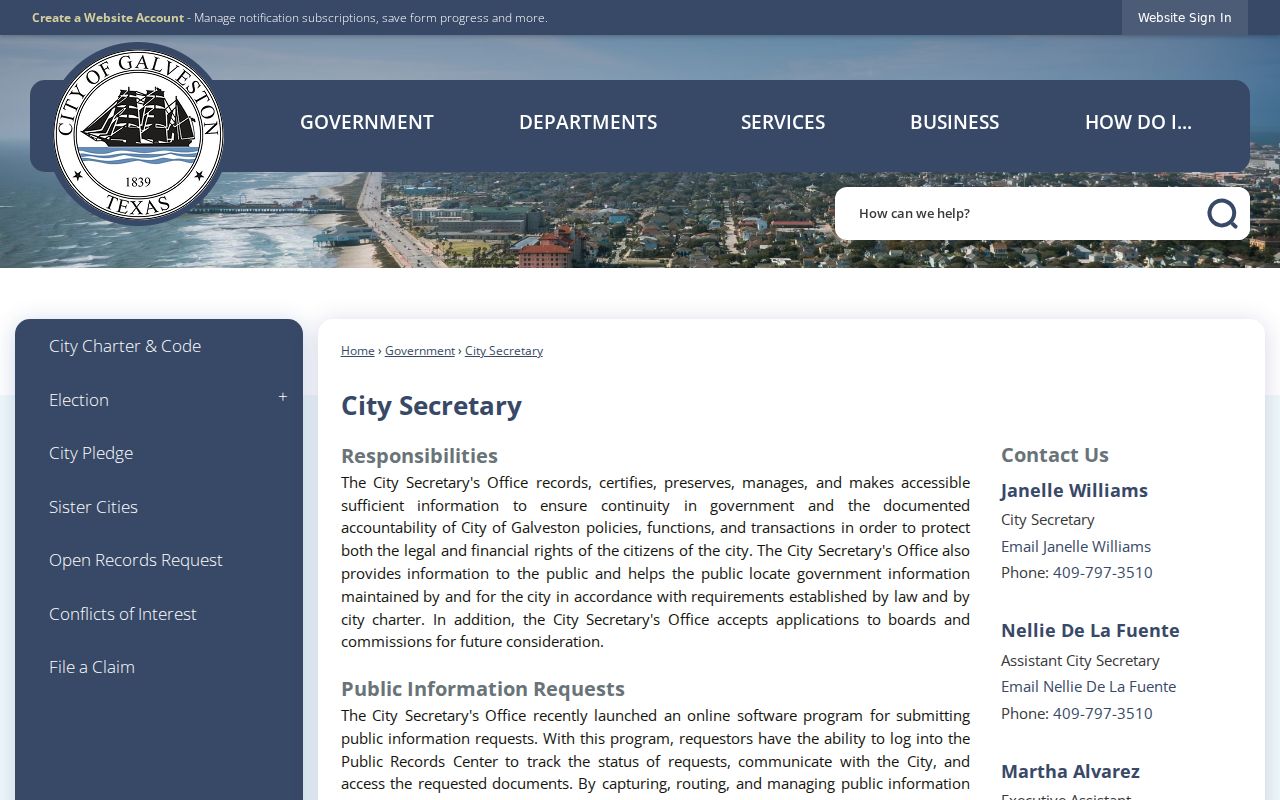
The City Secretary is a request route for city-held material, not a substitute for the County Clerk's deed index or the GCAD property account.
Galveston Property Roll Checks
GCAD is usually the fastest first check when a Galveston residents directory search begins with an address. Its simple routes include owner, address, and ID, while Advanced search adds fields such as street number, street name, property ID, geographic ID, subdivision, neighborhood, tax year, and property type. GCAD advises searching the street name alone when an address does not resolve. The returned account can orient a reader to the property, but GCAD itself says its legal descriptions and acreage should be verified before legal use.
| GCAD field | How it helps a Galveston search | Important limit |
|---|---|---|
| Owner Name | Finds an assessed owner; the hint permits first or last name alone. | Assessment is not proof of current residence. |
| Street Number and Street Name | Locates a parcel, especially when combined. | Prefixes, suffixes, and units are not part of the documented street-name format. |
| Property ID or Geographic ID | Supplies a stable parcel reference for later comparison. | It identifies an appraisal account, not a deed. |
| Subdivision, Abstract, or Neighborhood | Helps narrow a broad street result. | Live option lists can change. |
| Tax Year and Property Type | Separates appraisal context and can narrow advanced results. | Neither field establishes occupancy. |
The GCAD Property Search shows the owner, address, ID, and Advanced tabs used for this parcel orientation.
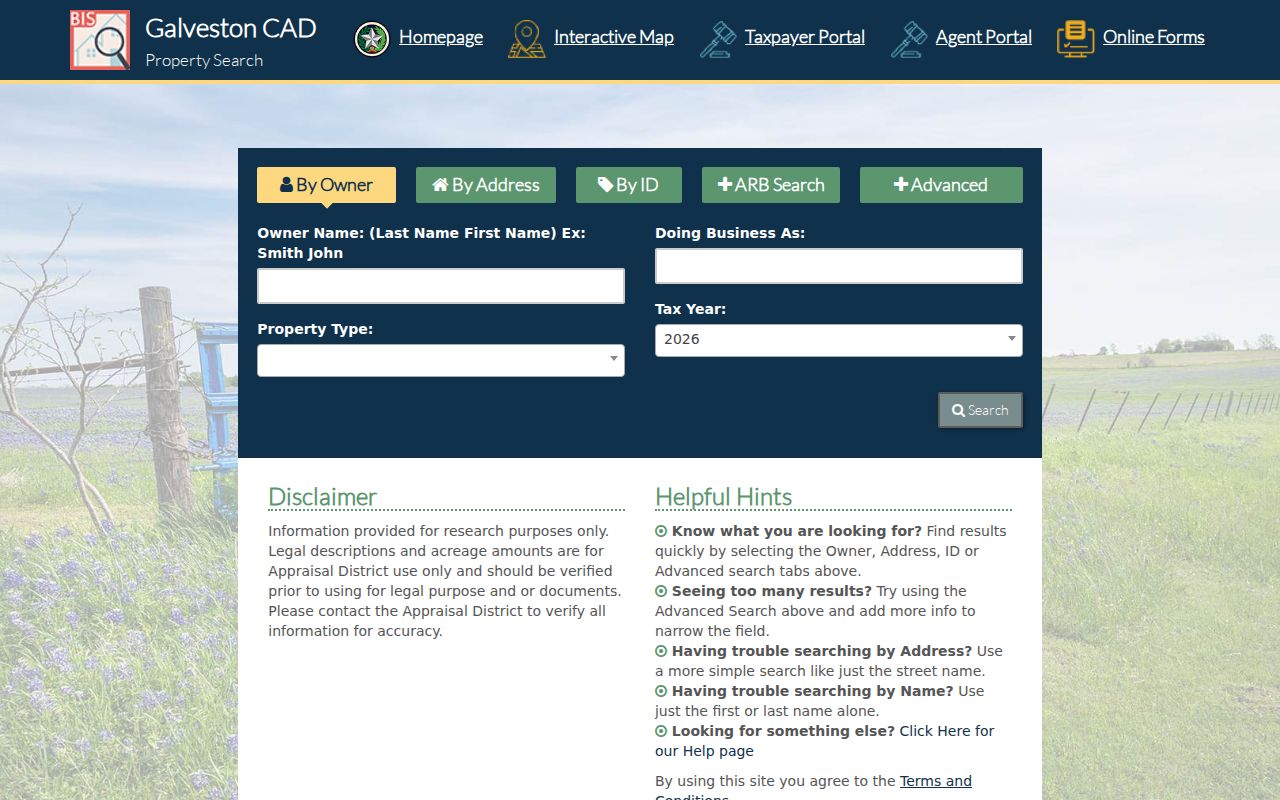
Read mailing and situs addresses as separate fields. A mailing address can show where an owner receives notices, not where that owner lives.
- Parcel
- An appraisal or map unit tied to a particular piece of land.
- Situs address
- The physical property location used by the appraisal account.
- Record index
- A finding aid that points to a record, rather than the record image itself.
- Criss-cross directory
- An address-oriented directory section that can connect a street number to a printed occupant listing for its year.
Galveston Deed Names and Dates
The County Clerk's real-property system adds the recorded instrument behind a parcel clue. Texas Local Government Code §193.003 requires an alphabetical grantor-grantee cross-index for deeds, powers of attorney, mortgages, correction instruments, and other listed property instruments. Begin with the GCAD legal description and current owner. In AVA, identify the owner as grantee around the purchase period, then preserve the grantor, grantee, instrument or book and page, recording date, document type, and legal description before drawing a conclusion.
Follow the seller as the earlier grantee for the same lot or block. That is a title-research method, not a shortcut to a current resident list. Galveston land records are documented from 1840 to the current date through county-linked sources, and the Texas State Library and Archives Commission documents early books from 1838. The county has not published a separate online imaging cutoff, so the counter, phone, mail route, or microfilm inventory matters when AVA does not return an older instrument.
Galveston County's AVA real-property search is the county-linked landing route for deed and property index work.
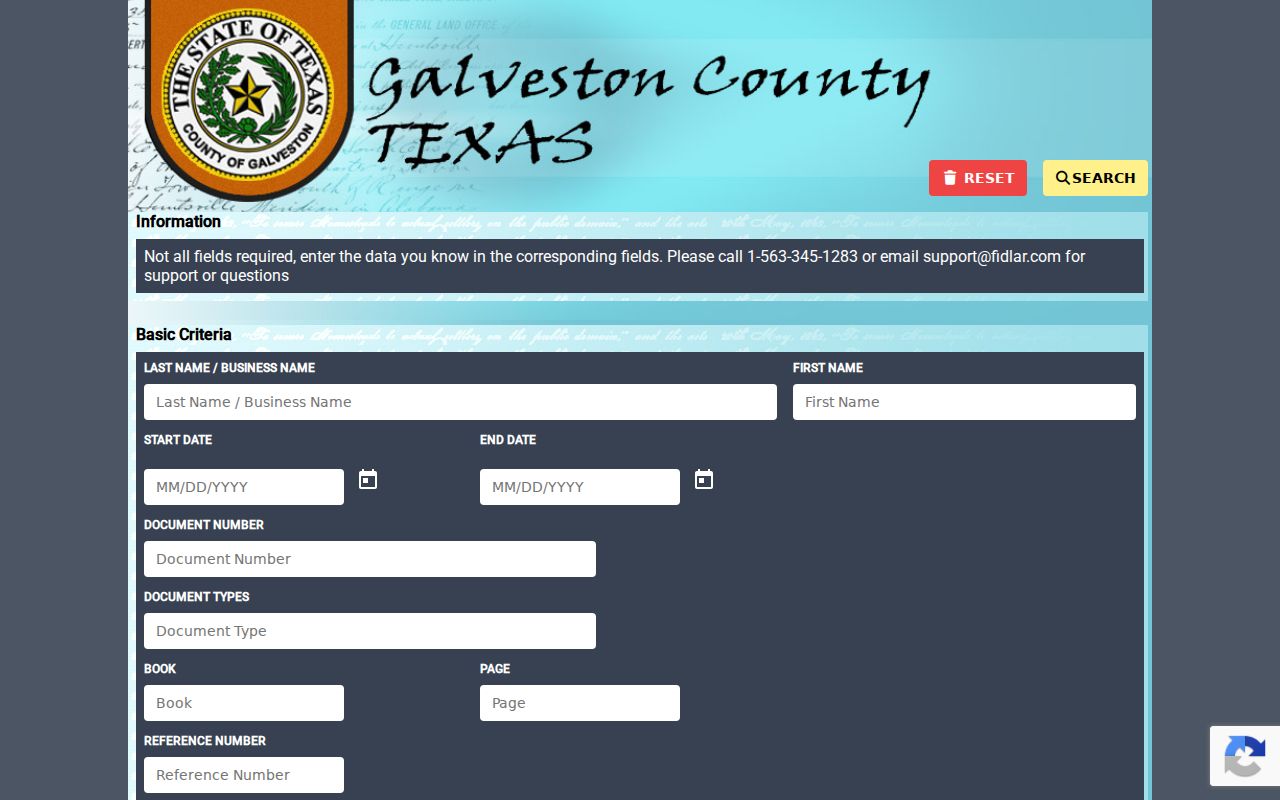
AVA's live field layout was not available in the text-only research session, so use the clerk's office to confirm current filters, images, and copy options.
Galveston Voter Registration Checks
Texas My Voter Portal is a verification tool, not a street-wide resident roll. Its name route uses first name, last name, county, date of birth, and ZIP. A VUID or Texas driver-license number can be an alternate route in the conditions stated by the portal. For a Galveston check, select Galveston County and use the registered spelling. The public voter record can confirm registration-related information and participation in elections, but it does not show ballot choices.
Texas Election Code §18.005 makes specified fields public, while Election Code §13.004 and federal law protect Social Security, driver-license, and personal-ID information. Some records also have stronger confidentiality protections. The statewide request form is a separate process with an affidavit and delivery controls. A person not found through an individual lookup may have a spelling variant, a former county, or an address-maintenance status. It does not prove the person never lived in Galveston.
Texas voter-registration instructions show the available name, county, date-of-birth, ZIP, VUID, and driver-license routes.
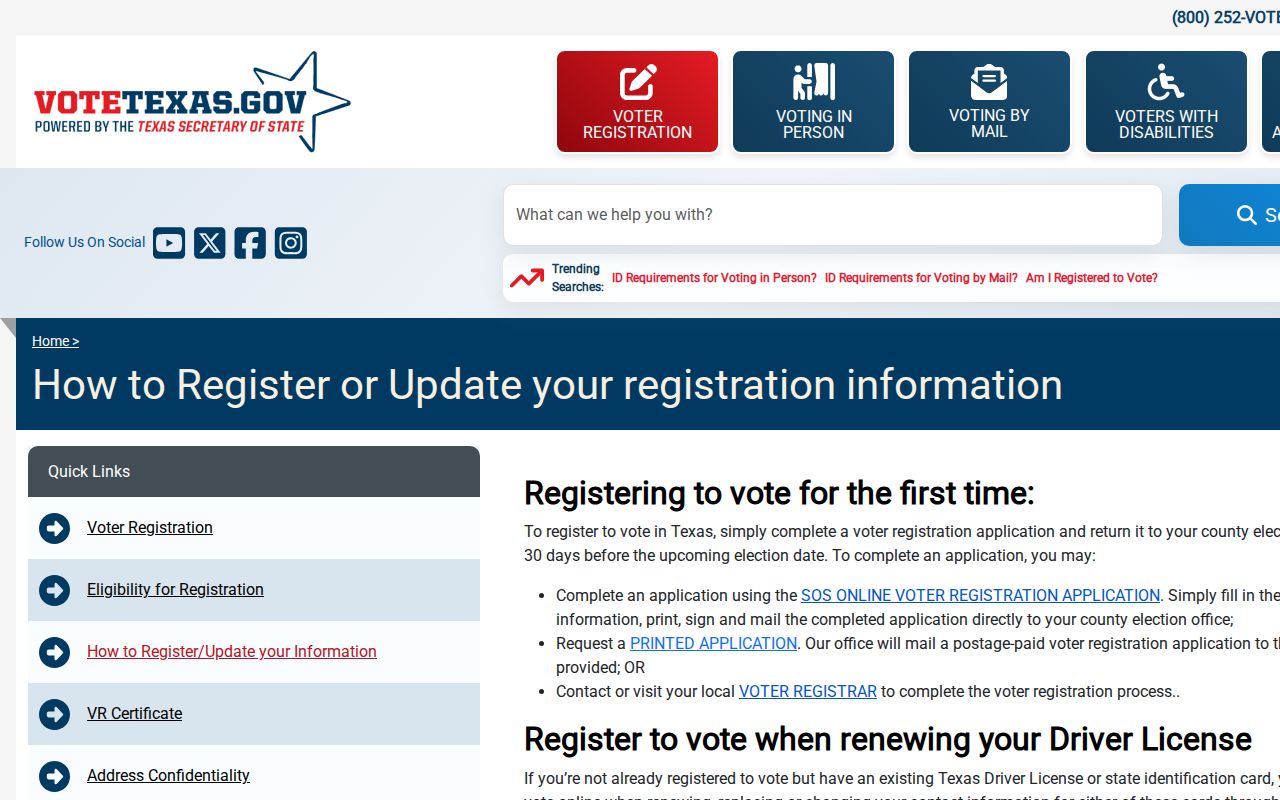
Use the result to corroborate a precise registration question, then keep protected data and ballot choices outside any research notes.
Galveston Current Resident Sources
Several Galveston sources look directory-like, but their scope differs. GCAD connects an assessed owner to a parcel. County instruments connect named parties to a recorded transaction. VoteTexas verifies an individual registration match. The City Secretary routes a defined request for city-held records, and city permit or code systems are address evidence rather than household lists. Keep each source in its own lane, and look for agreement across dates and identifiers.
| Galveston source | What it can establish | Custodian | Access channel |
|---|---|---|---|
| GCAD appraisal account | Assessed owner, mailing and situs fields, parcel identifiers | Galveston Central Appraisal District | Free web search, phone, or in-person help |
| County deed index | Parties, recorded date, document type, and legal description | Galveston County Clerk | AVA, counter, copies, certification, older microfilm |
| My Voter Portal | Individual registration check and polling information | Texas SOS and county registrar | Portal, county contact, or controlled request |
| City Public Records Center | Responsive city-held administrative material | City Secretary | Account-based request and messages |
| City ePortal and code routes | Address-linked applications, permits, cases, or notices | City Building and Code Enforcement | Portal, map/search, or city request |
For a single-person evidence chain, the Galveston resident lookup route focuses on matching a name to the appropriate official record rather than compiling unrelated entries.
Reading Galveston Portal Results
County court records now use Galveston County Odyssey and the statewide re:SearchTX system after the older Tyler public-access software stopped receiving updates after 2025. These are case tools, not general resident rolls. A party name can be a plaintiff, defendant, witness, attorney, surety, or another role. Check Galveston County, case type, cause number, filing date, and disposition before deciding whether a result concerns the right person.
re:SearchTX documents Cases and Hearings searches, wildcard use, sorting, case details, filings, exports, and a documents cart. Some documents require an account or purchase. Odyssey exposes Smart Search and Search Hearings, but its live cookie-based fields need confirmation in the portal. The municipal court keeps its own docket and disposition records at the clerk's office; no official public name-search form was found in the research.
Galveston County Odyssey is the current county court landing page.
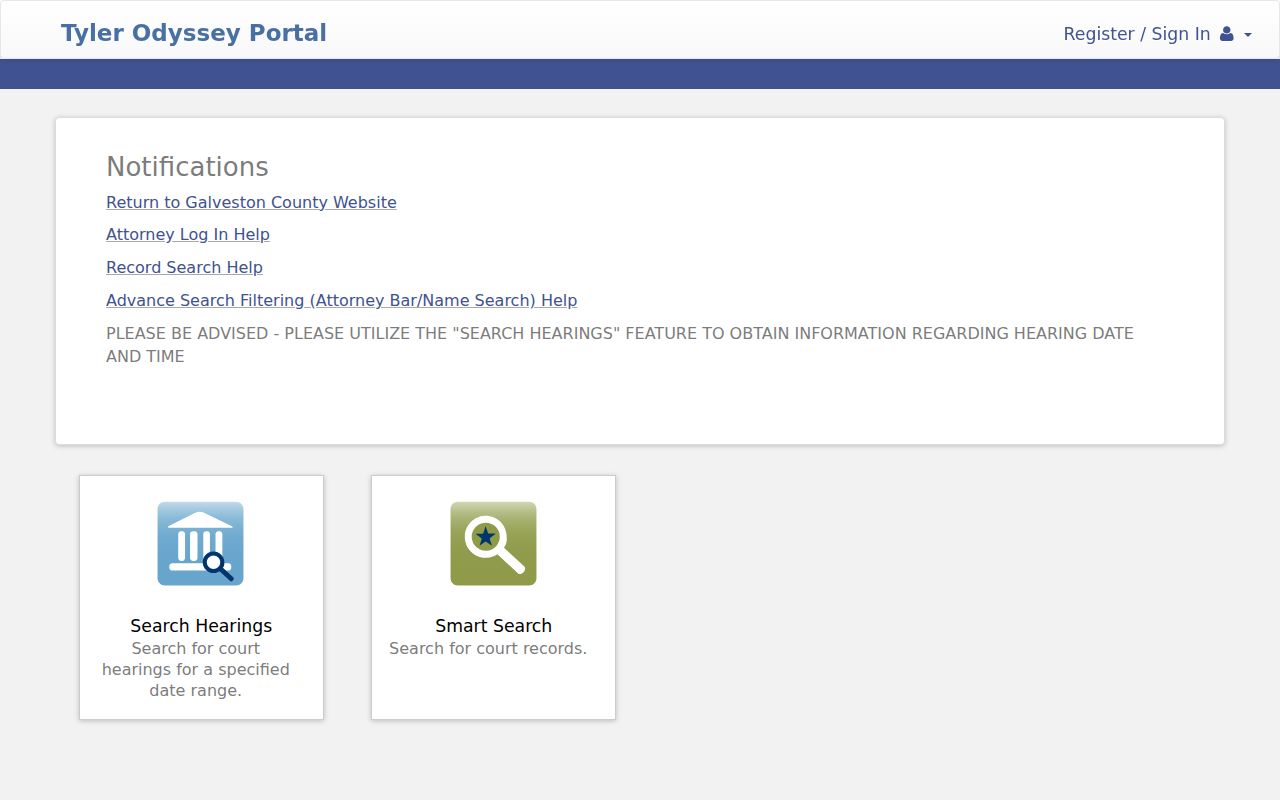
The portal screen is a starting point. Obtain a plain or certified copy from the clerk when the official file, rather than a search result, is needed.
The statewide re:SearchTX interface provides the separate Texas court-search route and documented result tools.
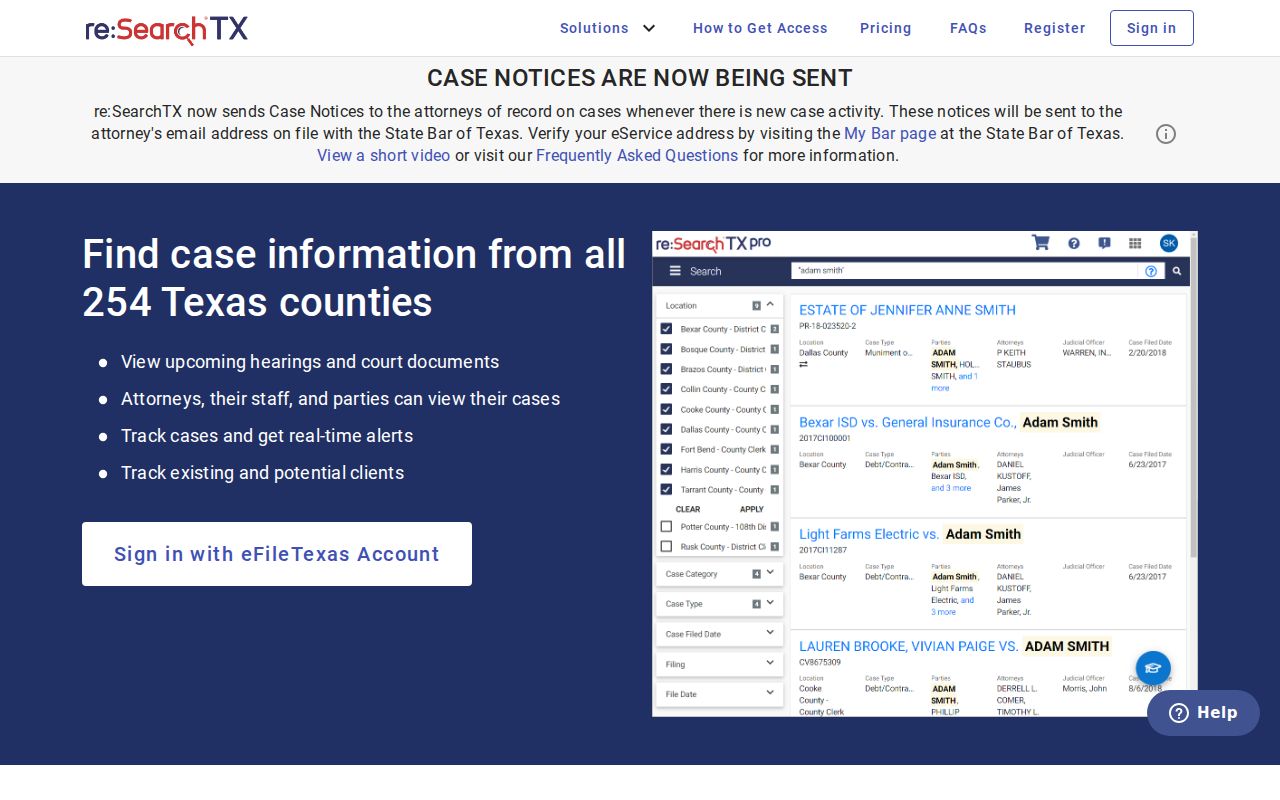
Record the displayed role and final disposition, and do not treat an allegation, a docket event, or a same-name result as a verified identity.
Galveston History Center Sources
GTHC supplies the historical layer that a current portal cannot. Its Galveston city-directory holdings span 1856 through 2024 in mixed formats, with digitized material from 1859 through 1925. Other routes include Portal to Texas History, library-card databases, in-library collections, microfilm, and bound reading-room volumes. The Center also holds newspapers, cemetery and mortuary material, church records, school sources, maps, photographs, vertical files, and neighborhood collections.
Search the page image, not just its OCR. Historic abbreviations, initials, avenue names, and spelling variants matter in Galveston. A researcher can compare a directory entry with a dated newspaper notice, tax roll, or recorded instrument without pretending that any one source proves a full household history. The reading room is open Tuesday through Saturday, 10 to 5, and staff can be contacted when a collection is physical or uncatalogued.
GTHC's genealogy resources identify the directories, newspapers, cemeteries, church material, and related local research routes.

When an online scan stops, the library-card, in-library, microfilm, and reading-room options keep the research trail open.
Galveston Storm-Year Research
Galveston's 1900 Storm is a real continuity break in local resident research. The GTHC recorded-deaths resource combines 5,132 names from newspaper lists and checks them against the 1899-1900 directory; about 215 names came from original city mortuary records from 1900 to 1904. Its own warnings matter: spellings can be wrong, entries can duplicate one another, identification can be uncertain, and illness-related deaths are excluded.
A missing listing after 1900 is a reason to check the death list, newspapers, mortuary material, cemetery registers, and probate records. It is not proof of a death or a move. The same care applies to every historical gap. GTHC's City Cemetery, Broadway, Lakeview, church, and mortuary collections have different date runs, and the correct volume depends on the event year.
| Record type | What it records | Why compare it |
|---|---|---|
| City directory | A compiler's dated name, occupation, and residence statement | Shows a person before or after a gap. |
| Recorded instrument | Parties and a legal property description | Tests a property interest, not residence. |
| Sanborn map | Block, footprint, material, and use | Explains the built setting without naming occupants. |
| Mortuary or cemetery source | Death or interment clues | Can corroborate an endpoint with a date-matched record. |
Galveston Historical Resident Directories
Galveston historical resident directories are especially strong because GTHC maintains both physical and digital access paths. The local collection covers 1856-2024, while the Portal to Texas History digitization covers 1859-1925. Cross-reference listings by address begin in 1908, so a later address question can start in a street section and then return to the surname entry for occupation and household details. Earlier volumes require careful reading of residence phrasing, numbered streets, and lettered avenues.
Telephone directories from 1904 onward can bridge some periods, but they are usually subscriber tools rather than a complete household count. The 1870 and 1921 examples show why exact transcription matters: entries can use residence, rooming, intersection, avenue, spouse, and occupation conventions that change by year. The fuller collection method, including directory page images and their access formats, belongs in the Galveston city directories collection.
Galveston Privacy Boundaries
Texas records have public, restricted, and unlocated layers. Recent vital certificates have eligibility rules. Voter information has protected fields and confidentiality programs. Juvenile, sealed, expunged, nondisclosed, adoption, and protective-order material can have separate restrictions. Texas Government Code chapter 552 provides a request route for governmental records, but it does not erase confidentiality law, and court case files follow the clerk and judicial rules rather than a generic request to an unrelated office.
For a city record, send a specific request to the City Secretary's Public Records Center. For a county administrative record, describe the record, date range, office, and preferred format. Under the Texas Public Information Act, a governmental body must respond promptly and, when more than ten business days are needed, provide a release date. If a portal lacks a record, preserve the search terms and date, then contact the custodian or the archive rather than filling the gap with a guess.
Galveston Vital Record Routes
Vital records provide event evidence, not a general Galveston residents directory. Galveston County Health District Vital Statistics handles local births and deaths, including local records from 1903 forward and some births from 1877-1902. Recent certified copies have qualified-applicant, identification, and relationship or tangible-interest requirements. Texas Government Code §552.115 opens birth records after 75 years and death records after 25 years, with a separate one-year rule for an unidentified decedent.
Texas DSHS maintains public marriage indexes from 1966 and divorce indexes from 1968, but a DSHS verification is not a certified marriage license or divorce decree. The County Clerk is the certified marriage source, and the District Clerk is the certified divorce-decree source. GCHD provides in-person, mail, and online paths for its local services; DSHS provides mail, online, and local or in-person routes depending on record type. Use the current custodian instructions before seeking a copy.
Texas DSHS vital applications and forms list the state forms for verification and record requests.
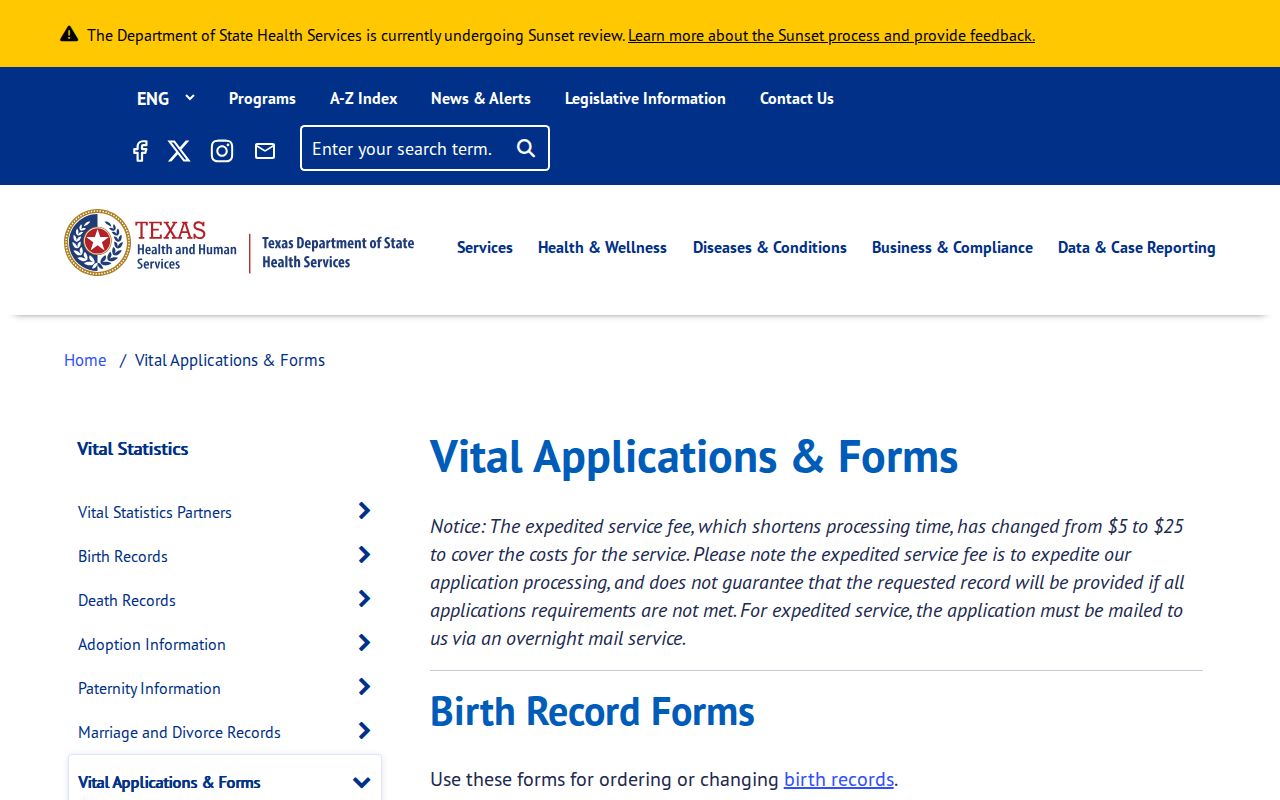
The form route helps identify the right request, while the issuing office decides access, verification, certification, and current processing requirements.