
Galveston Previous Residents by Era
A backward address trail uses different sources for different periods. The Galveston County Clerk holds recorded land instruments, but the county does not publish one universal online-image cutoff. GTHC holds tax rolls, directories, maps, and house-history material that can bridge an older address. The useful question is not simply who lived here before. It is which source can date an owner, a listed household, a structure, or a death-related endpoint, and what that source cannot establish on its own.
| Source | Years it covers | Where held | What it shows |
|---|---|---|---|
| County land records | 1838/1840-current documented | County Clerk, AVA, and TSLAC microfilm | instrument parties and legal descriptions |
| Historic tax rolls | 1838-1921 | GTHC microfilm | lot or outlot assessment clues |
| Tax abstracts | 1880-1914 | GTHC | property values by city lot or outlot |
| City directories | 1856-2024 physical; Portal 1859-1925 | GTHC, Portal, library databases | stated residences, occupations, and addresses |
| Reverse address sections | begins 1908 | GTHC directory run | address-to-occupant clues |
| Sanborn maps | 1877, 1885, 1889, 1899, 1912, 1918, 1923, 1947 | UT Austin, LOC, and GTHC | footprint, material, use, and block context |
| Insurance Board records | dates vary by older structure | GTHC manuscript collections | structure details, prior-owner and use notes |
| Federal census | released schedules through 1950 | NARA, HeritageQuest, and FamilySearch | household snapshot on census date |
| Mortuary and interment records | 1875-1926 mortuary; selected cemetery runs | GTHC and cemetery resources | death or burial endpoint clues |
| Permits and newspapers | ePortal current; newspaper runs vary | City Building Division and GTHC | work at an address, notices, and dated events |
For a recent address, orient the parcel first, then use the recorded instrument path. For a historic structure, add the block, outlot, and lot before searching people. GTHC’s house-history material is designed around that local geography, and its library and archive channels are the fallback when an online search has no usable result.
GTHC’s house and property research guide introduces the local sources that connect an address to a building history.
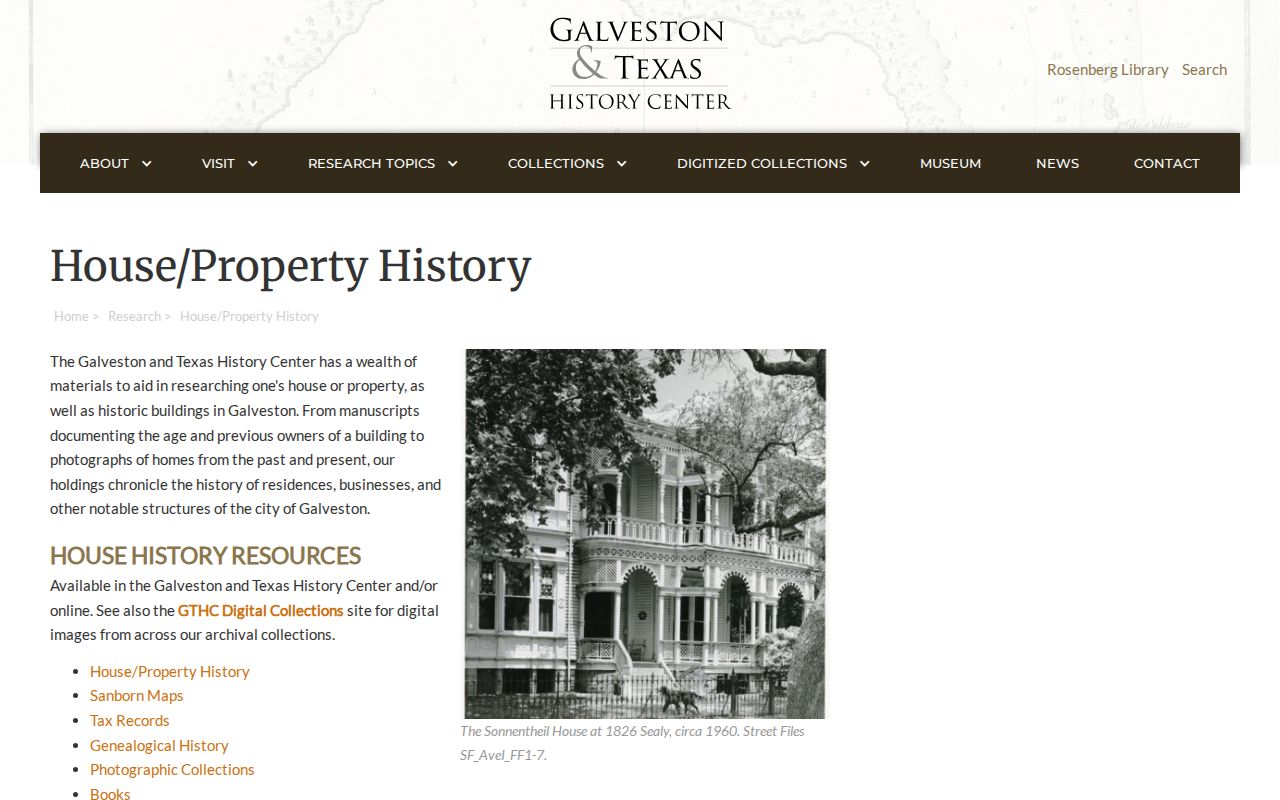
The guide reinforces the central method for Galveston previous residents research: record the property vocabulary first, then compare named records with the building and block evidence.
Galveston Previous Residents Need Address Aliases
Do not search a historical address only in its modern form. Galveston’s numbered streets and lettered avenues often appear under later names. Avenue J is Broadway, Avenue E is Postoffice, Avenue F is Church, Avenue G is Winnie, 21st is Moody, 22nd is Kempner, 23rd is Tremont, 25th is Rosenberg, and 29th is Martin Luther King. A source may abbreviate an avenue or use the year’s street vocabulary. Preserve that exact string and test the alternate form separately.
Block, lot or outlot, cross street, and building footprint are stronger continuity clues than a street label alone. When GCAD does not return an address, its published hints say to drop prefixes, suffixes, and unit numbers, then try the street name alone. City GIS and a Sanborn sheet can orient the location, but neither one is title evidence. A historic address may also use a place label that no longer matches the present jurisdiction.
Follow the Galveston County Deed Chain
Start the deed chain with the current account in the Galveston Central Appraisal District property search. GCAD distinguishes the situs, or property location, from the owner mailing address. Treat the latter as a correspondence clue, not proof of a present residence. Record the account or geographic ID, legal description, lot and block or abstract, owner name, and tax year. Then search the owner as grantee through the Galveston County AVA real-property search and match the legal description before accepting a deed as part of the same property trail.
- Normalize the present address and retain historic street aliases, ZIP, subdivision, and the GCAD geographic ID.
- Save the current account’s owner, situs, mailing address, legal description, lot or block, and tax year as separate fields.
- Find the current owner as grantee in the County Clerk’s real-property index, then note the instrument or book and page, document type, recording date, parties, and visible image or fee information.
- Search that seller as a prior grantee for the same legal description. Test initials, variant spellings, married names, and fiduciary roles when the older index requires it.
- Repeat backward until the applicable index or book range ends. Move to the clerk counter, phone or mail route, GTHC, or TSLAC microfilm when the online search does not expose an older record.
- Grantor and grantee
- The grantor is the party conveying an interest in an instrument; the grantee is the party receiving it. Search both roles in a backward chain.
- Chain of title
- A sequence of recorded instruments connected by parties and the same legal description. It can have gaps and still needs document-level checking.
- Legal description
- The lot, block, outlot, abstract, subdivision, or other property description used to distinguish a parcel when street names or numbers change.
The county-linked Kofile historical index shows the older search controls for type, year, alpha, category, and book, volume, or page.
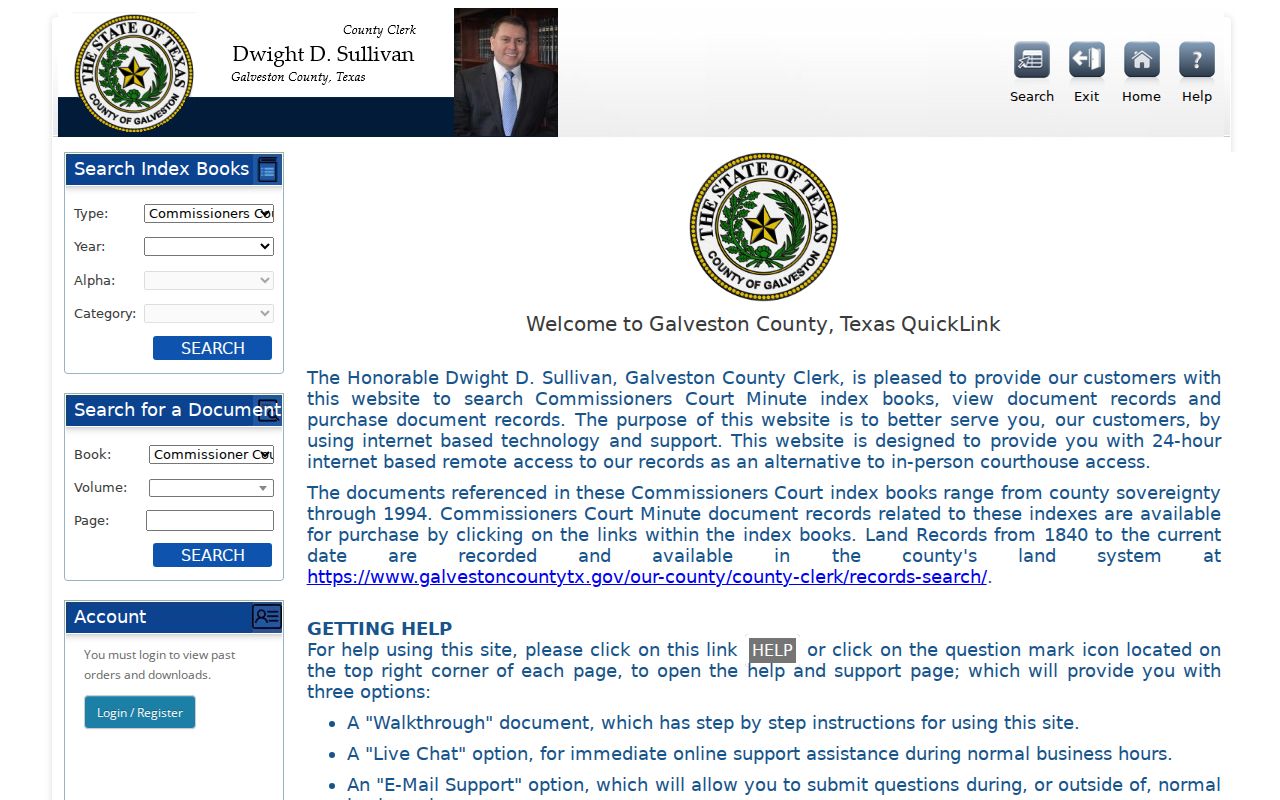
The historical index route is valuable once the modern search is thin, but the research does not establish every live AVA field or an online-image cutoff. Confirm those limits with the custodian before assuming a record is unavailable.
Galveston Previous Residents Need Separate Evidence
Several records may mention the same house while answering different questions. GCAD can identify an assessed owner, mailing address, situs, property ID, geographic ID, and legal description. A County Clerk instrument documents a recorded transaction party and its recorded description. A city directory records a compiler’s stated residence or business address. A permit connects a project or application to an address and record number. Keep these statements in separate columns rather than treating them as one identity.
| Appraisal account | Current orientation to assessed owner, situs, and property identifiers; not a complete occupant record. |
|---|---|
| Recorded instrument | Party, date, document type, and legal-description evidence; not a guarantee of uninterrupted title. |
| Directory listing | A dated residence or business statement; not proof of ownership or continuous presence. |
| Sanborn or Insurance Board record | Built-environment and structure context; not a resident roll. |
| Permit or newspaper notice | A dated event at an address; not proof of every person connected to the property. |
This distinction is the practical answer to a common myth about address history. A parcel owner, a mailing address, a directory resident, and a permit applicant are not interchangeable. The closer the research gets to a living person, the more important it is to stop at the lawful, necessary historical question.
Pair Galveston Previous Residents with Census Years
Ownership is only one part of who lived here before. GTHC says address cross-references begin in the Galveston directory run in 1908. For 1908 and later, move from an address section toward a listed occupant clue; for earlier years, read surname entries and the avenue or street description. Compare that entry with the nearest released census schedule. A census is a household snapshot on its census date, while the directory is an annual commercial compilation. The two sources should be paired, not collapsed into one record.
- Choose a directory year close to the target period and copy the name, address form, occupation, household note, and page citation.
- Use the next available directory year to test a move, spelling variant, new spouse notation, or lodging change.
- Match the address and household to the nearest released federal census year, recording the census date separately from the directory date.
- Use a newspaper notice, obituary, cemetery volume, or probate file to test a departure or death-related endpoint.
- Write the result as a dated sequence with each source and its limits, rather than stating that a single address result proves continuous residence.
The historical volumes and their access routes are detailed in the Galveston city directories collection. Telephone directories from 1904 forward can bridge some gaps, though they are often arranged by subscriber name rather than every household. GTHC’s newspaper holdings and library databases provide the next fallback when a directory year is absent.
Galveston Previous Residents and the 1900 Storm
The 1900 Storm can interrupt a Galveston previous residents trail without providing its explanation. GTHC reports that archive materials were damaged or lost, and a family line may move from a directory or newspaper into a death list, mortuary book, cemetery volume, or survivor notice. The recorded-deaths project combines 5,132 names from newspaper lists checked against the 1899-1900 directory, with about 215 names from original city mortuary records from 1900-1904. It also warns that misspellings, duplicates, uncertain identification, and excluded illness-related deaths remain possible.
GTHC’s recorded-deaths resource is the appropriate local starting point for a storm-era endpoint.
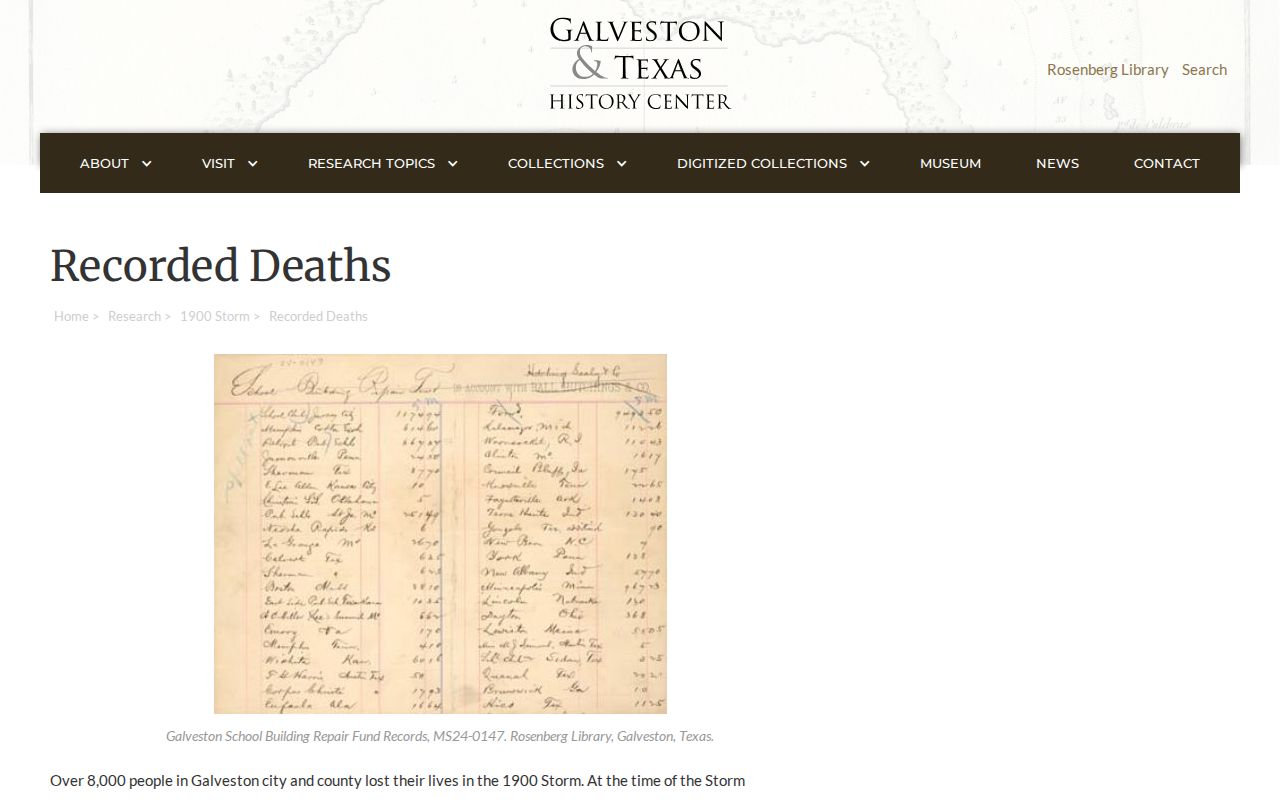
A disappearance from the next directory is not a death finding. Use the death list as a lead, then retain the directory page, newspaper, cemetery, mortuary, or probate source that supports any conclusion.
Galveston House Files and Sanborn Maps
Sanborn maps can date the physical setting around a prior household. GTHC lists Galveston years from 1877 through 1947, and the Library of Congress describes a 1912 atlas with 111 sheets. A sheet can show the block and lot context, footprint, stories, building material, use, and later changes. Compare the historic sheet with today’s GIS parcel orientation. That comparison can confirm that the record trail stays on the same block even when the address wording changes.
For many older structures, GTHC’s Insurance Board files can add known build date, roof, frame or brick construction, lighting fuel, size, prior-owner or use information, and occupancy notation. The filing key is often city block, outlot, and lot number. Staff can locate reading-room copies, and original material may be needed. This is why lot information often matters more than a single address string.
The Texas State Library and Archives Commission’s Galveston inventory identifies early deed microfilm, district-court docket indexes, naturalization material, and WPA index reels when local online results end.

TSLAC is an offline fallback, not an assurance that every volume survived or is online. Its inventory even notes that no Volume Q appears in the Deed Record and that Volume 17 contains Galveston City Company deeds.
Close a Galveston Previous Residents Trail Carefully
End a property trail with the narrowest record that answers the remaining question. An obituary or cemetery record can test a death date. Probate may identify an heir, executor, inventory, or property issue, subject to sealed or confidential portions. A City Building Division ePortal search can date an application or inspection by address and record number, while a City Secretary Public Records Center request is the channel for a specific city-held record that is not exposed online. For county administrative records, a focused request under the Texas Public Information Act should state the record, office, date range, and preferred format.
The County Clerk has counter, phone, and mail channels for older instruments and copies. GTHC staff, microfilm, archive collections, and city or county custodians are the documented fallback chain when the portal offers no result. An index entry or plain copy is normally the research start; request a certified copy only when the purpose requires legal proof.